
Inside the Andrew Murray Centre for Spirituality, Wellington: His Study, Letters and Archive
⏱ 7 min read
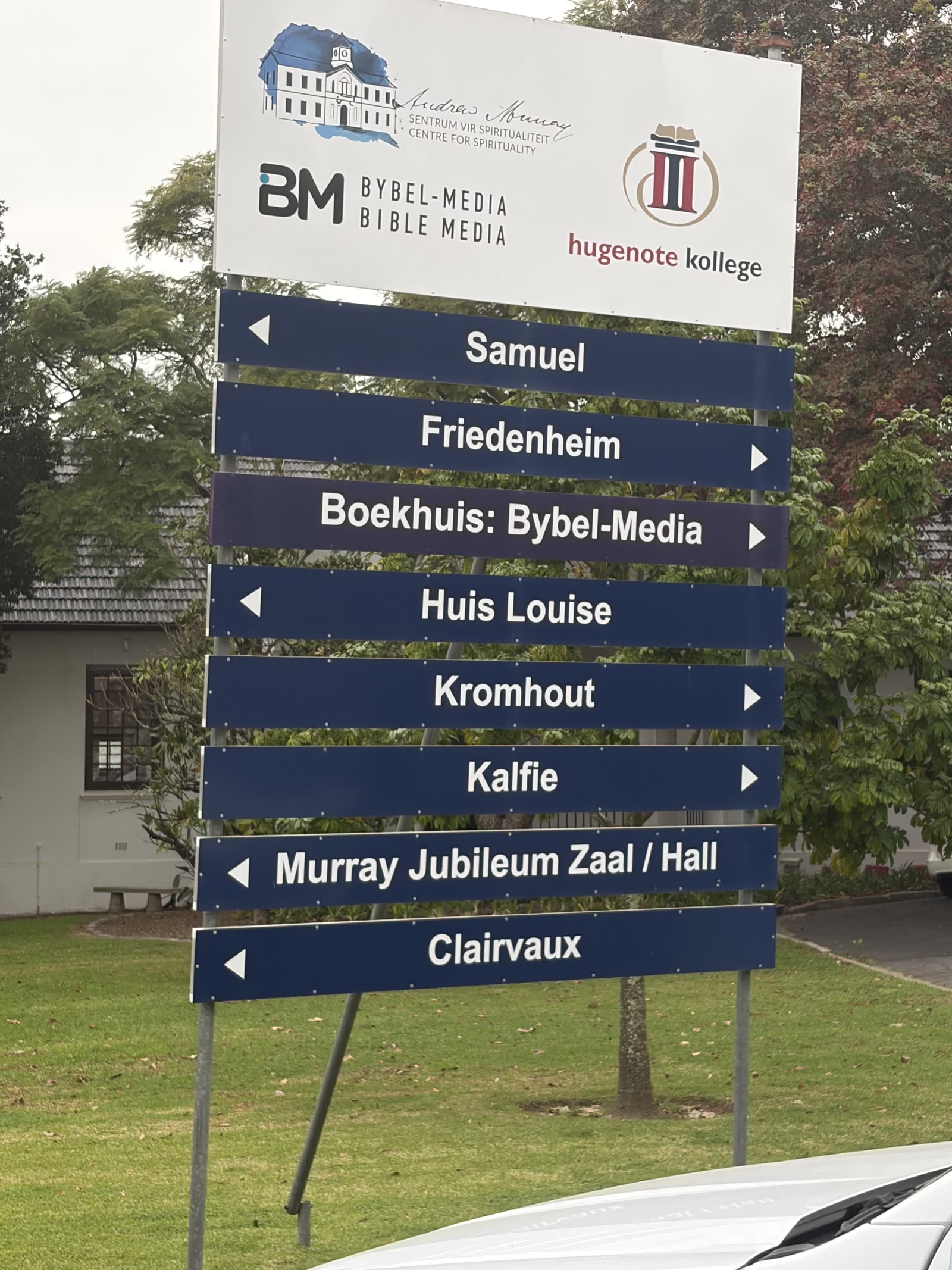
Most readers meet Andrew Murray one short chapter at a time — thirty-one days in Abide in Christ, thirty meditations in Waiting on God. What is easy to lose, a chapter at a time, is that a man wrote all of it: sat at an actual desk, for the better part of five decades, in the small town of Wellington in South Africa’s Cape winelands. The world he worked in still stands there — his study furniture, his papers, his books — held, deliberately and carefully, by the Andrew Murray Centre for Spirituality (Andrew Murray Sentrum vir Spiritualiteit), run today as part of the Dutch Reformed Church in the Western Cape.
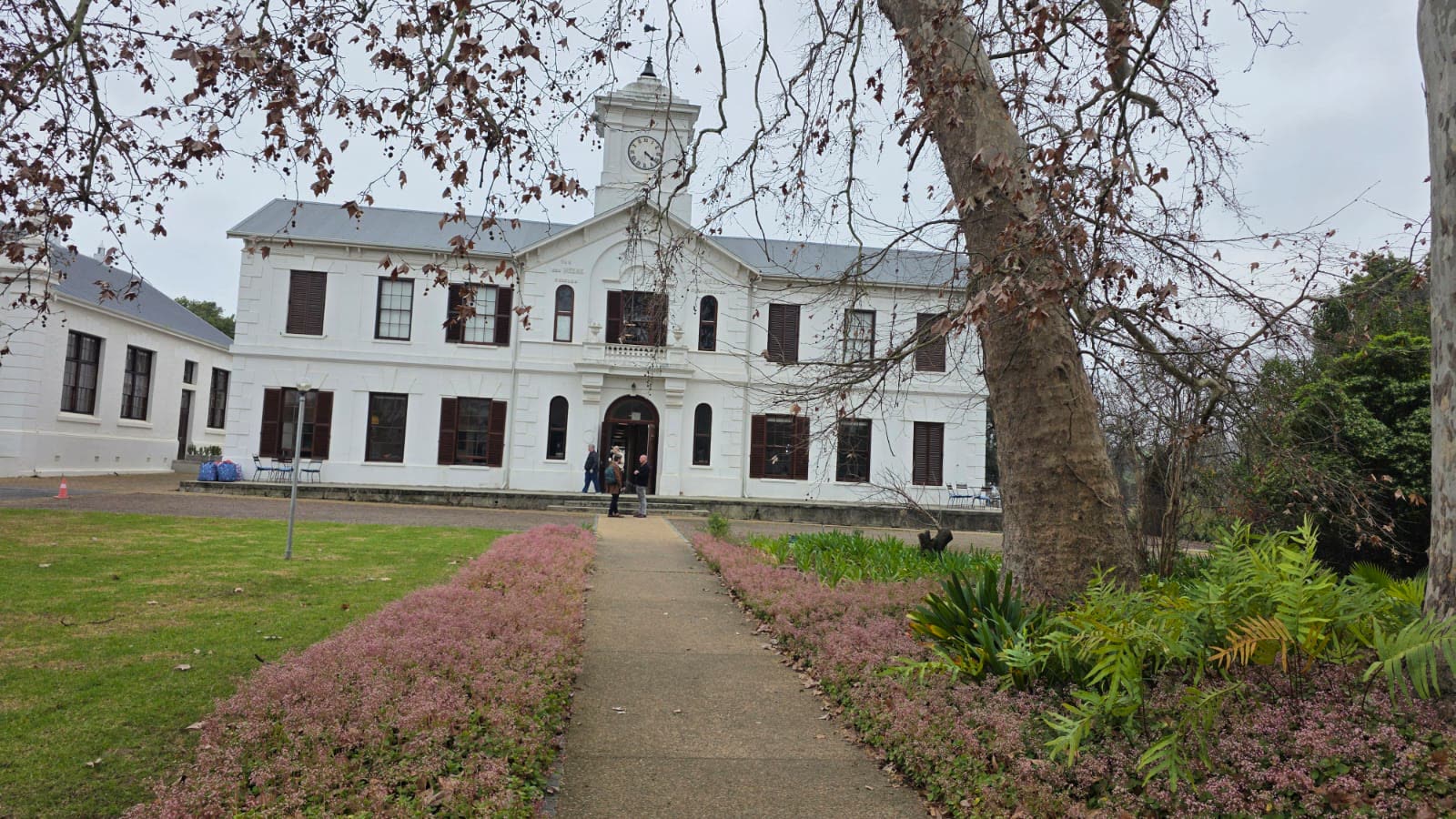
What follows is a look inside — his study as it has been preserved, a letter in his own hand, and the archive that holds, shelf by dated shelf, decades of his published editions. Stilling Waves draws often on Murray’s writing; it seemed worth showing readers where the words came from — the desk, the letters, the shelves.
Andrew Murray in Wellington, South Africa
Andrew Murray (1828–1917) came to Wellington in 1871 as its Dutch Reformed pastor and stayed for the rest of his working life. It was never a retirement post. From this one town he kept up a pace of writing that eventually ran past two hundred titles, and he built things that outlived him: in 1874 he founded the Huguenot Seminary in Wellington for the education of young women. Hugenote Kollege shares the grounds and the signpost with his Centre today — a pairing of names that would not have surprised him.
Andrew Murray’s study
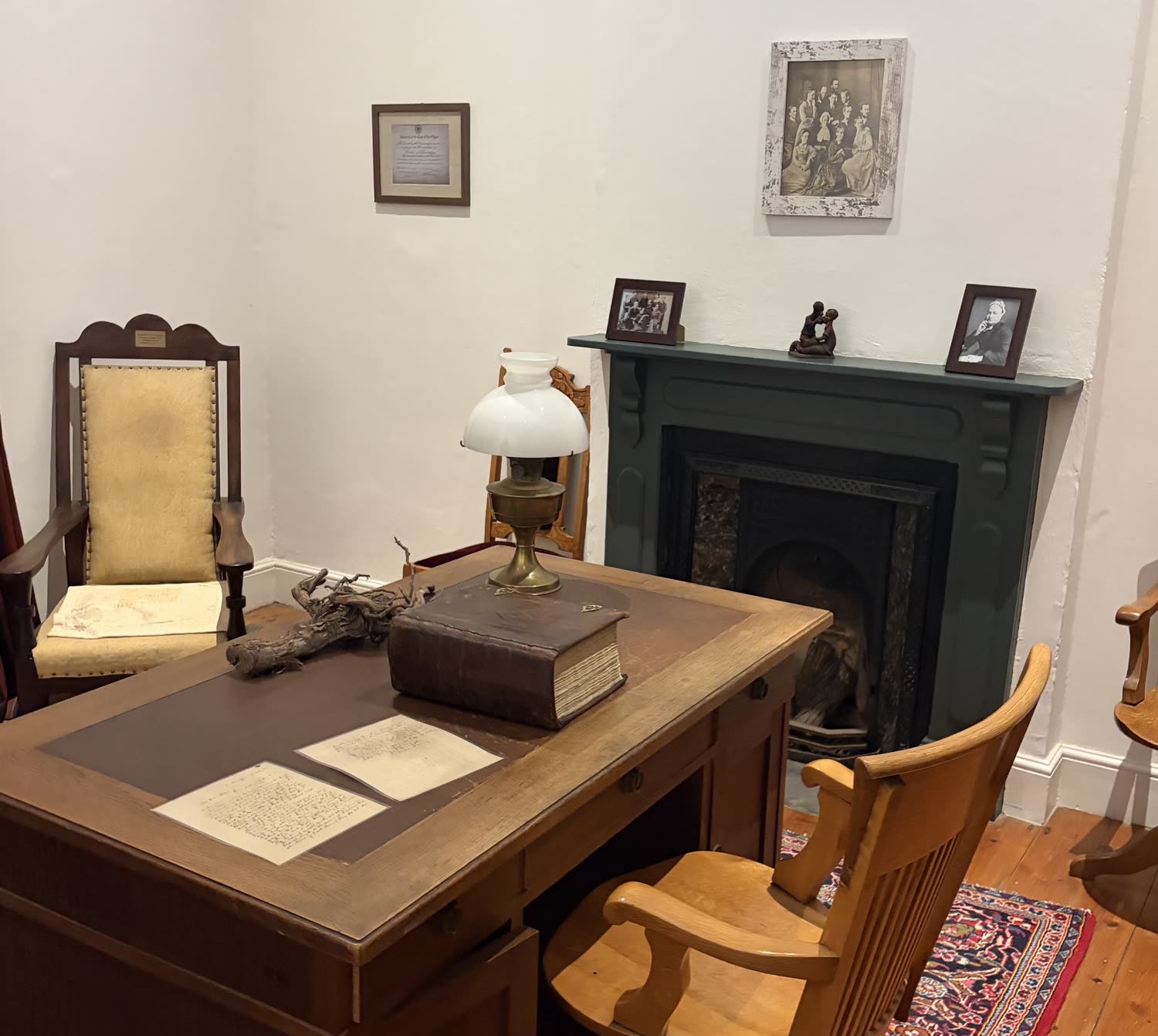
The Centre preserves Murray’s study — a plain wooden desk, an oil lamp with its white glass shade, a heavy leather-bound Bible worn soft at the corners, and a green-painted fireplace mantel holding small framed photographs of the family around him. Two visitors’ chairs sit opposite the writing chair, worn in the particular way old church furniture wears.
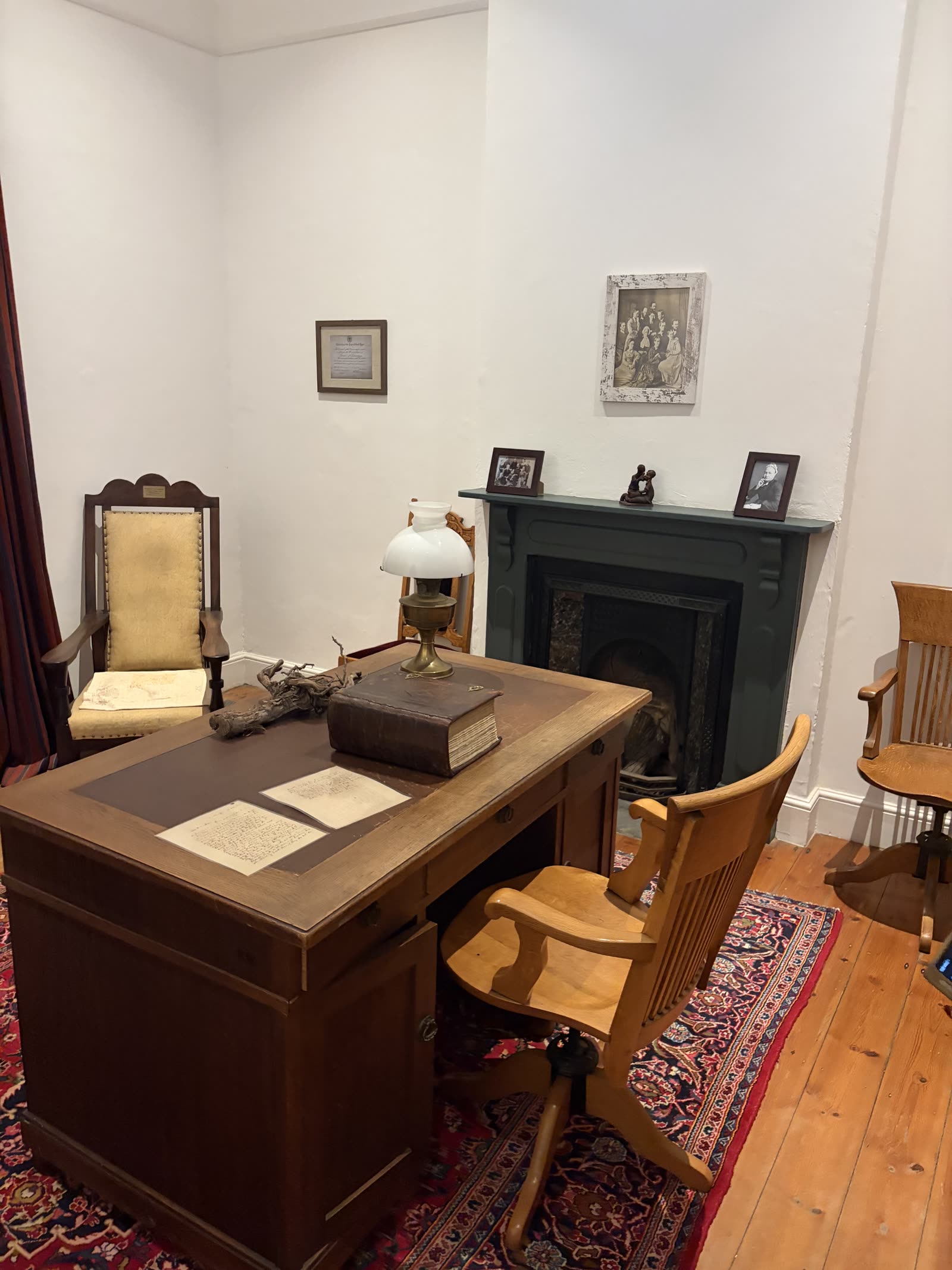
It is a working room, not a shrine. Nothing about it performs importance. That plainness is, if anything, the most Murray thing about it: a man who wrote so insistently about abiding — the ordinary, unhurried, daily dwelling-in — worked in a room built for exactly that kind of day.
Beside the desk stands a high-backed chair, its worn upholstery held by rows of old tacks, a small brass plate fixed to its crest. It is the object in the room a visitor lingers over longest. Did the waiting happen here? Murray gave much of his life to teaching exactly that practice — Waiting on God is thirty-one days of it, and The Inner Chamber is his manual for the closed door and the quiet hour — and no one writes that way about stillness secondhand. The room does not say which chair held those hours; rooms never do. But it is difficult to stand before this one and not ask.
A letter in Andrew Murray’s own hand, 1881
Among the papers kept at the Centre is a letter dated Wellington, 26 July 1881, written to “My Dear Mary.” It runs to two pages of close, quick cursive — the handwriting of a man who wrote constantly and had long since stopped thinking about his penmanship. It is family correspondence, not devotional writing: news of a sermon preached that week, a series about to begin on the book of Joshua, word of relatives, holiday plans discussed and half-settled. It closes: “your loving father, Andrew Murray.”
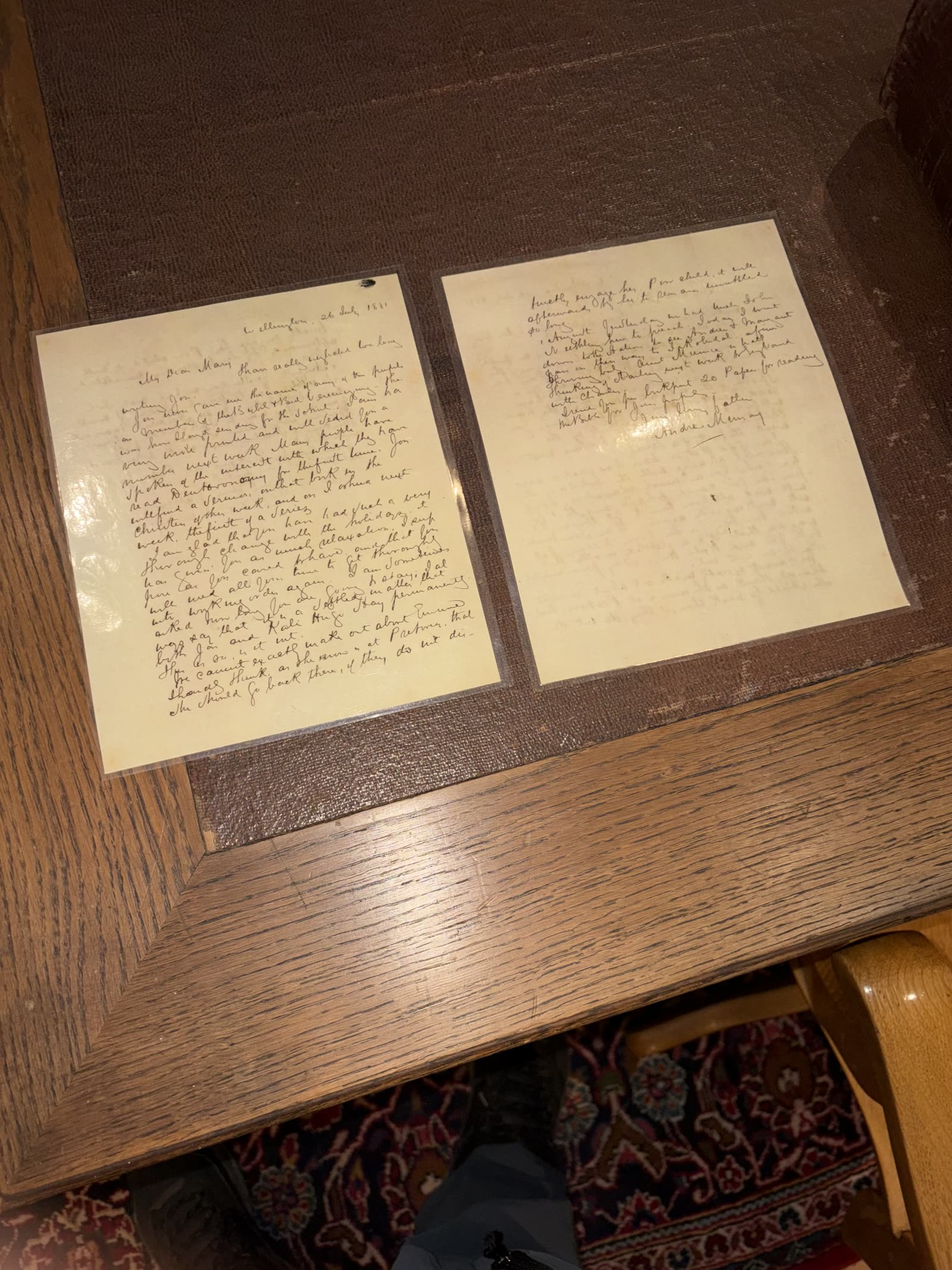
The date is worth pausing on. In July 1881 Murray was a year away from the English publication of Abide in Christ, and only a few years from With Christ in the School of Prayer. The hand that wrote this unhurried note about family and a Joshua series is the same hand, in the same town, in the same season. Some of the cursive resists confident transcription even up close — a few words in a letter nearly a century and a half old simply will not yield to certainty, and no honest reading should pretend otherwise. But the shape of it is unmistakable: the devotional writer and the letter-writing father are visibly one and the same.
The Andrew Murray archive
The library at the Centre holds Murray’s output the way a serious archive should — shelved and dated, a collection catalogued as part of the research of the Dutch Reformed Church’s Archives. One case runs chronologically by publication year: a shelf marked 1858–1884, the next 1885–1887, and onward through the decades, English, Dutch and Afrikaans editions standing side by side. Abide in Christ, The Holiest of All, With Christ in the School of Prayer, Absolute Surrender — some titles appear five and six times over, in visibly different bindings: evidence that publishers kept reprinting the books because readers kept buying them.
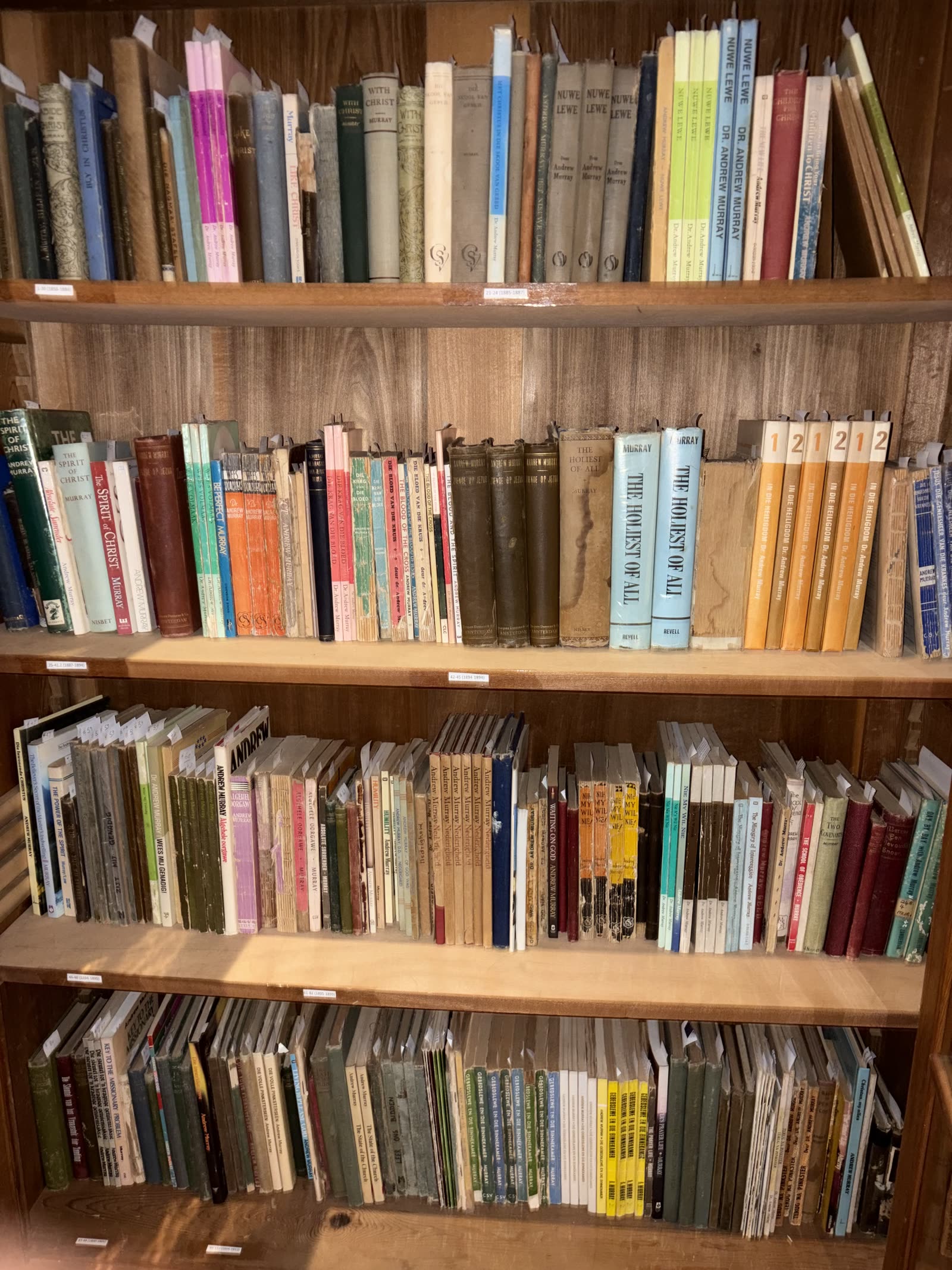
Look closely at how the books are kept. Every volume — worn hardback or crumbling paperback — carries a small paper tab over the top of its spine, placed there by hand; the shelf edges carry typed labels sorting the collection by publication year. The same title gathers in threes and fives, Afrikaans and Dutch and English printings shelved as one thought: Wees Volmaak beside Be Perfect, Die Bloed van die Kruis beside The Blood of the Cross. They stand behind the glass doors of plain wooden cases — cupboards, not display vitrines — opened when a volume is wanted. It is the housekeeping of a working library: numbered by hand, dated by shelf, meant to be taken down and read. Care that does not announce itself, for an author who never did.
Murray wrote in Dutch and Afrikaans as often as in English — In die Heiligdom, Nederigheid (Humility), Op God Wag (Waiting on God) — a reminder that he was, first, a Cape pastor writing for his own congregation, and only afterward an author whose books travelled the world.
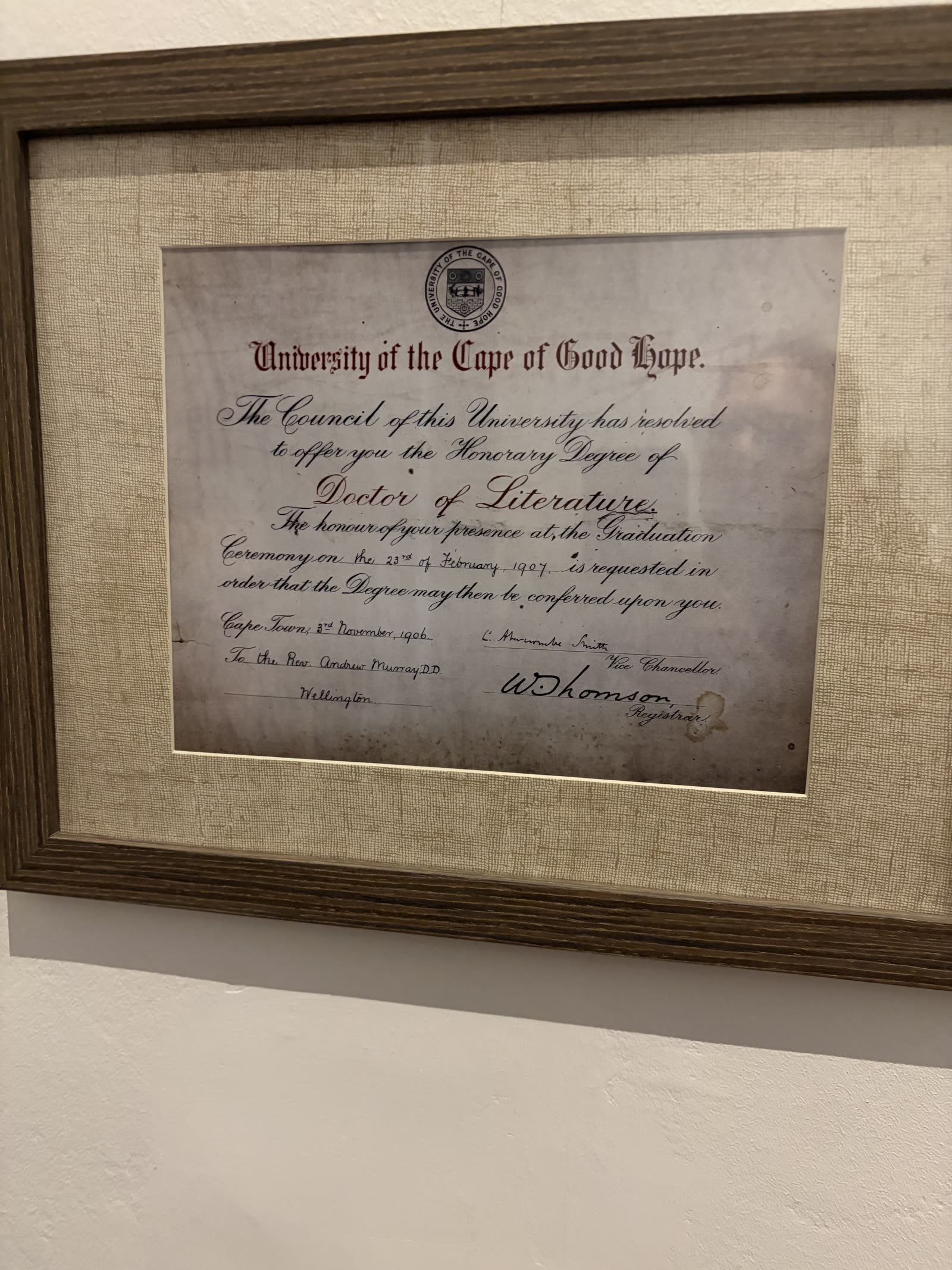
The 1907 certificate from the University of the Cape of Good Hope offering him an honorary Doctorate of Literature — addressed simply “To the Rev. Andrew Murray, D.D., Wellington” — is here too: one of the few markers of formal recognition for a body of work that was never trying to impress anyone.
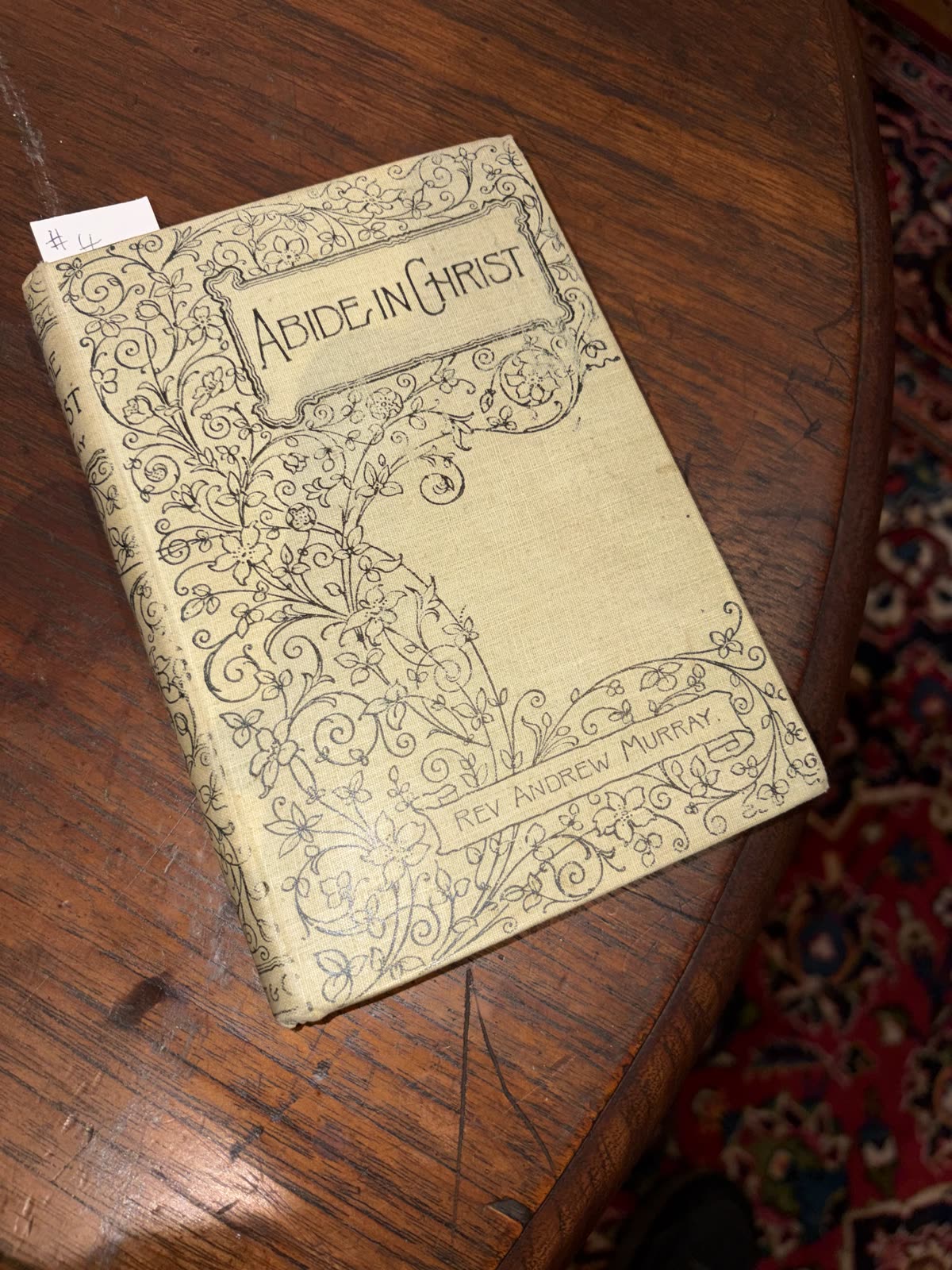
Among the shelves, one cover stands out for how carefully it was made: an original edition of Abide in Christ, its title framed in hand-drawn floral scrollwork — the kind of decoration nineteenth-century publishers reserved for books they expected to be read for a long time. They were right about this one.
A living centre, not a museum
Not a shrine, and not a museum either. What keeps the place from feeling like a glass case is that it still does the work Murray built it for. The grounds hold a modern chapel — a white gable reached across a reflecting pond, all glass and calm on the inside — alongside a stone-lined prayer labyrinth set into the lawns. Retreats are held here through the year; people still come to Wellington to be quiet in the town where the books were written.
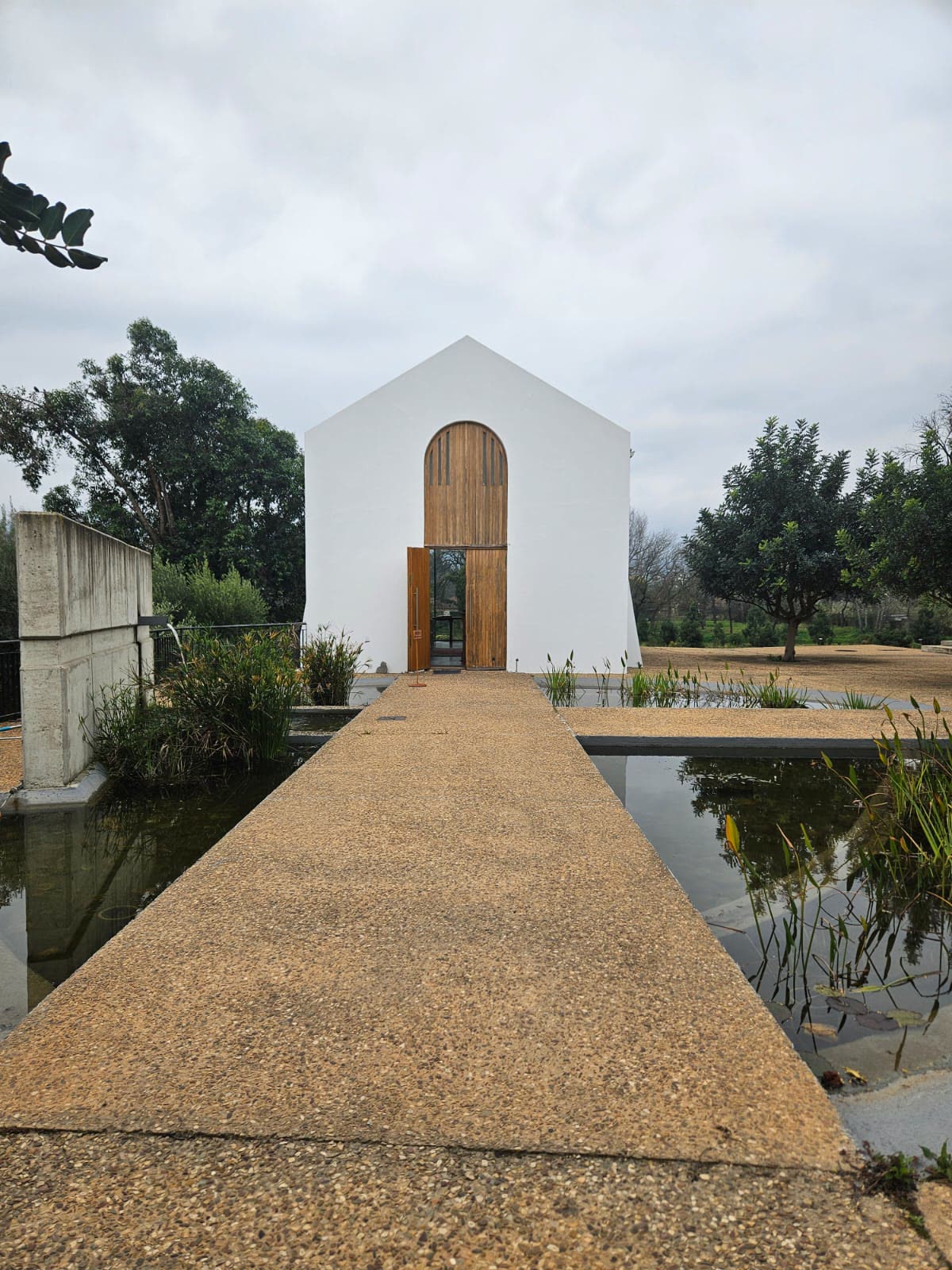
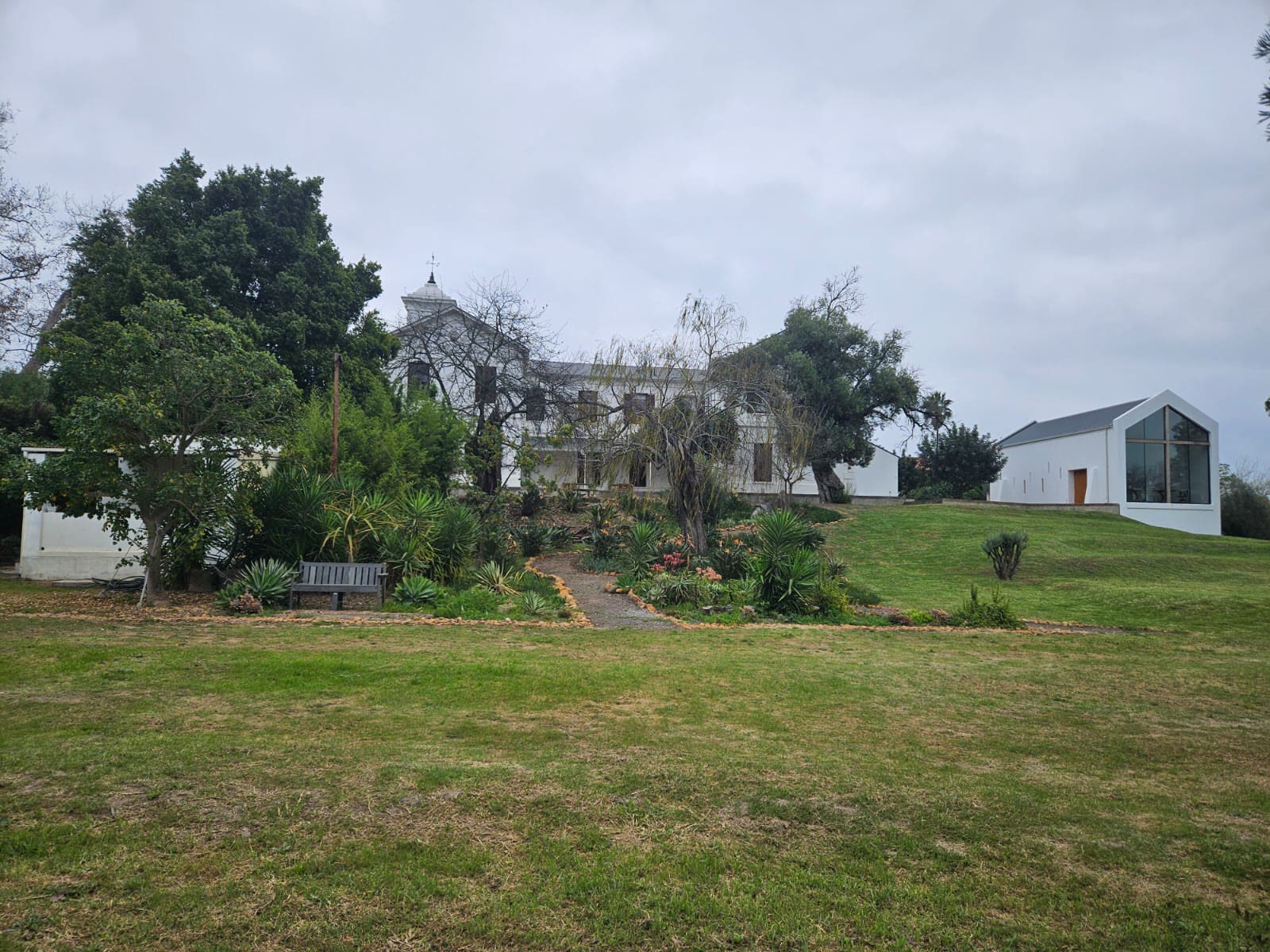
That continuity is what matters. A man who spent decades teaching one thing — the believer’s daily abiding in Christ — left behind not just 240 books but a place still arranged around the practice the books teach. Slowness, in Wellington, is not a theme. It is the schedule.
Where to start reading Andrew Murray
None of this changes what Murray wrote. It only grounds it. The Andrew Murray Centre for Spirituality — and the Dutch Reformed Church Archive partners — is the reason his study, his letters, and an extensive, chronologically shelved run of his published editions still exist to be seen at all — and Stilling Waves is glad to credit them for it.
Photographs were taken by Stilling Waves Press at the Andrew Murray Centre for Spirituality, Wellington, and are used with the Centre’s kind permission.
Readers who want to start with Murray properly, rather than from a single quoted line, will find a fuller guide to where to begin — and how to read him at the pace his books reward — in our Andrew Murray Reader’s Guide.